



When a veteran dies, the nation offers more than sympathy — it offers honors and benefits designed to ease the family’s burden and repay a debt of gratitude. Understanding veteran burial benefits and military funeral honors ensures your loved one receives everything they’ve earned. At Memory Eternal Funeral Directors, we help Chicago families navigate VA benefits and arrange military honors with the dignity our veterans deserve.
Key Takeaways: Veteran Burial Benefits
- Eligible veterans receive a burial allowance, a gravesite, and a headstone or marker at no cost.
- The VA pays a burial and funeral allowance for service-connected and some non-service deaths.
- Every eligible veteran may receive military funeral honors: flag, folding ceremony, and “Taps.”
- Apply through the VA — your funeral director helps you gather the needed documents.
- Spouses and dependents may also qualify for burial in national cemeteries.

1. What the VA Provides for Veterans
For veterans discharged under conditions other than dishonorable, the Department of Veterans Affairs provides a package of burial benefits that includes: burial in a VA national cemetery (with a gravesite, opening and closing, and perpetual care at no cost), a government-furnished headstone or marker, a burial flag, and a Presidential Memorial Certificate.
If the family chooses a private cemetery instead, the VA still provides the headstone or marker, the burial flag, and the certificate at no charge — and may reimburse a portion of burial costs.
2. The Burial and Funeral Allowance
The VA offers a burial allowance to help offset costs. For deaths that are service-connected, the VA generally reimburses up to a generous cap for burial and funeral expenses plus a separate plot-interment allowance. For non-service-connected deaths, eligible veterans may receive a smaller allowance toward burial and interment. Payment amounts are adjusted periodically — your funeral director can confirm current figures when you’re ready to file. The allowance is claimed on VA Form 21P-530 with supporting documents including the discharge papers (DD-214), the death certificate, and funeral invoices.

3. Military Funeral Honors: The Tribute They Deserve
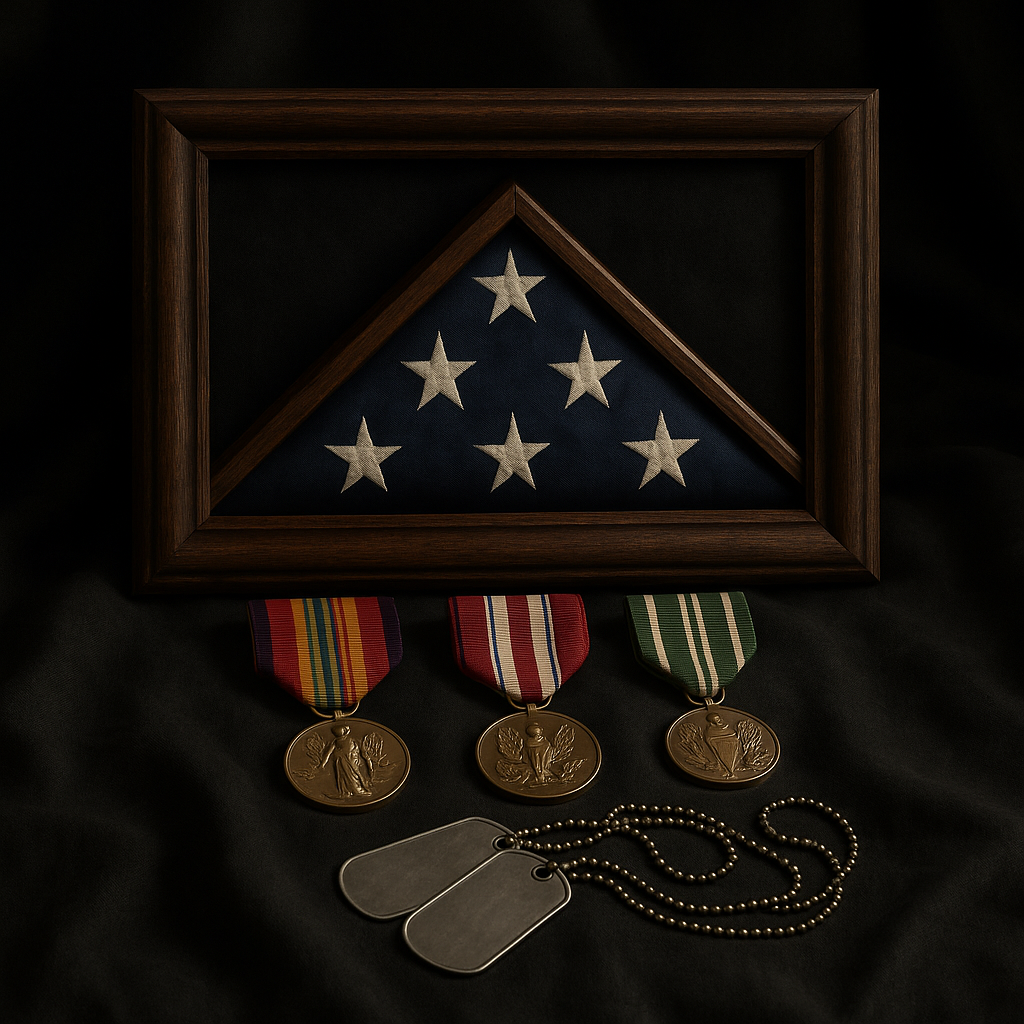
Under federal law, every eligible veteran is entitled to military funeral honors at no cost to the family. The honors ceremony typically includes the folding and presentation of the American flag and the playing of “Taps” by a bugler or recorded music. Where available, a two-person detail from the armed forces participates. Families should request honors when making arrangements — your funeral director will coordinate with the military through the honors coordinator in your area. Note that for honorably discharged veterans, honors are provided by any branch of the military.
4. National Cemeteries Near Chicago
Illinois families have access to several national cemeteries, including the Abraham Lincoln National Cemetery in Elwood — the most prominent VA cemetery in the region — as well as Jefferson Barracks National Cemetery across the river in St. Louis for those further south. A plot in a national cemetery is at no cost to the veteran, and burial is also available for eligible spouses and dependents, including in some cases when the spouse passes first. Your funeral director can confirm eligibility and placement.
5. What Documents Do You Need?
To access benefits, you’ll need the veteran’s discharge papers (DD-214 or equivalent), their death certificate, and — if filing for the burial allowance — the funeral home invoices. If the DD-214 is missing, the National Personnel Records Center can help retrieve it. Your funeral director should walk you through assembling the file, so nothing delays the benefits your family is owed.
6. Planning a Veteran’s Funeral in Advance
If your loved one is a living veteran, now is the perfect time to document their wishes and eligibility. Pre-planning a funeral ensures their military service is honored exactly as they wish, and that no paperwork is lost. When the time comes, our team manages the honors request, the VA forms, and every detail of the service. To begin, contact our funeral directors — we’re honored to serve those who served us. Memory Eternal.