



For families new to the tradition — or those who have attended services for years but never needed to plan one — the Greek Orthodox funeral can feel like stepping into a world of deeply meaningful rituals. Understanding the step-by-step sequence of the Orthodox funeral brings comfort and confidence during a difficult time. At Memory Eternal Funeral Directors, we guide Greek Orthodox families in Chicago through every step, from the first call to the final blessing.
Key Takeaways: The Greek Orthodox Funeral
- The Orthodox funeral unfolds in three main services: Trisagion, funeral liturgy, and burial.
- Each step has a purpose rooted in the hope of the resurrection.
- The body is treated with reverence throughout — icons, candles, and incense accompany it.
- A funeral director experienced in Orthodox customs coordinates every detail with your parish.
- Memorial services continue after burial at 40 days and at one year.
1. The First Steps After Death
When a loved one dies, the first calls are often the most important: your parish priest and a trusted funeral director. The priest will guide the spiritual aspects — prayers, timing, and rites. Your funeral director handles the practical side: transportation of the body, paperwork, coordination with the church and cemetery, and preparation for viewing.
At the moment death occurs, don’t worry about getting everything right. Your funeral director and priest have done this many times. They will walk you through what happens next, step by step.
2. Preparation of the Body
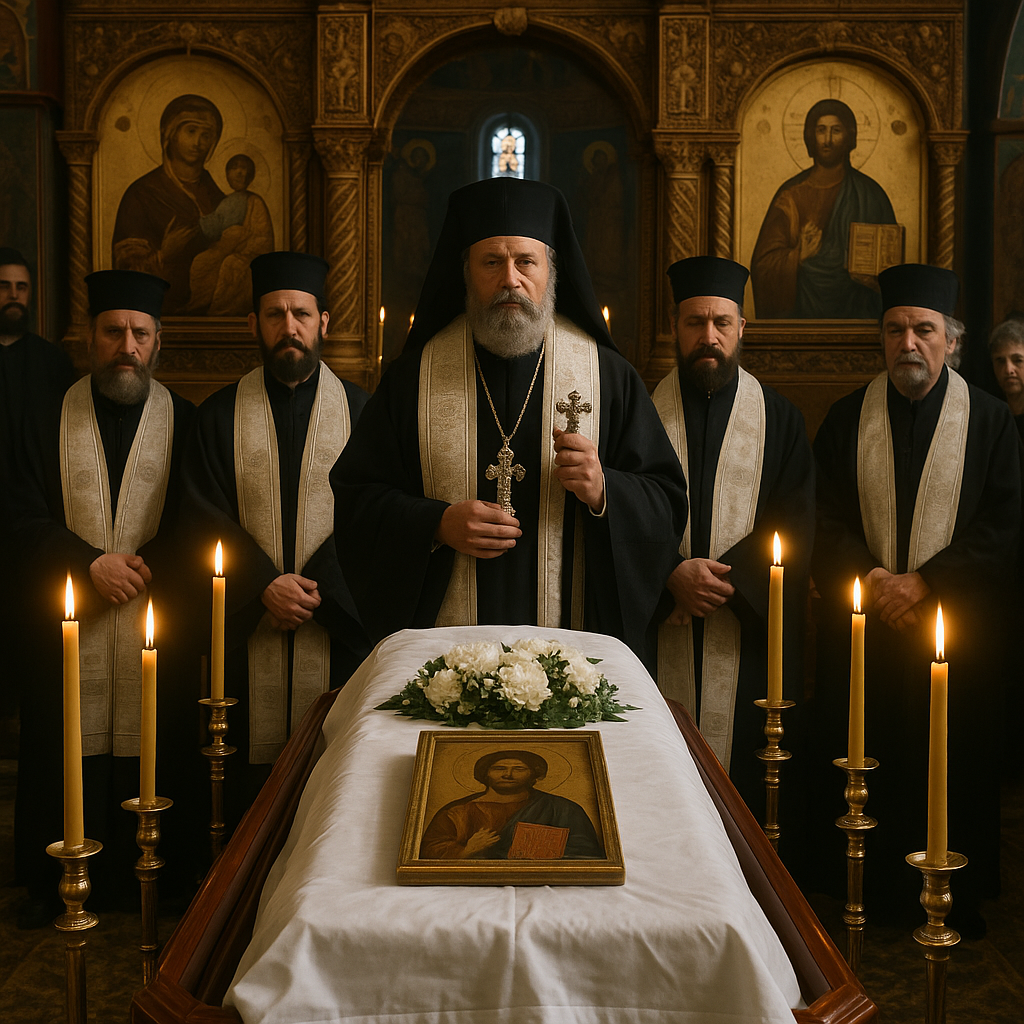
In the Greek Orthodox tradition, the body is washed, clothed, and treated with great reverence. It is then placed in the casket, typically with an icon on the chest or hands, and sometimes a cross. The casket remains open at the funeral home for visitation if the family wishes, allowing mourners to offer their final respects in the presence of the body.
3. The Trisagion Service (Evening Before)
The Trisagion (“Thrice Holy”) is a short evening service usually held the night before the funeral, often at the funeral home. The priest chants prayers for the departed, incense fills the room, and mourners offer condolences to the family. It’s a gentle beginning to the farewell — a time for close friends and relatives to gather privately. Learn more about the Trisagion service.
4. The Funeral Service (Morning of Burial)
The funeral itself is held at the church, usually in the morning. The casket is carried into the nave and placed in the center or in the solea, facing east — symbolically awaiting the second coming of Christ. The service is a celebration of the life and faith of the departed, filled with hymns, the Epistle and Gospel readings, and the priest’s prayers. During the final portion, mourners approach the casket for the “Kiss of Peace” — a last farewell to the body.
5. The Burial at the Cemetery
Following the church service, the procession moves to the cemetery. In Orthodox tradition, the grave is oriented east to face the rising sun, a symbol of the resurrection. The priest conducts a final blessing, and the body is lowered into the ground as the Trisagion is chanted one last time. Family and friends may place flowers or soil on the casket as a final act of love.

6. The Makaria Meal
After the burial, the family traditionally hosts a makaria — a mercy meal for mourners. Fish is often served as a symbol of Christ, and the gathering offers comfort, community, and a chance to share memories. If you’re unsure how to arrange a makaria, many churches and communities host them; your funeral director can also coordinate catering.
7. Memorial Services: 40 Days, 1 Year, and Beyond
For Greek Orthodox families, the funeral is only the beginning of remembrance. Memorial services (mnemosyna) are held at 40 days and at the one-year anniversary, with koliva prepared and shared. These services, rooted in the belief that the departed live in the prayers of the church, are a powerful source of comfort.
Why Work With a Funeral Director Who Knows Orthodox Tradition?
Every detail of the Orthodox funeral — from the icon on the casket to the east-facing grave — carries meaning. An experienced funeral director coordinates seamlessly with your parish priest, ensuring nothing is missed. We serve the Greek Orthodox communities of Chicago and its suburbs with cultural understanding and compassion. If you’re planning ahead, our pre-planning services let you document your Orthodox funeral wishes in advance. And when you need us most, we’re available 24/7.
For more on the theology and order of Orthodox funeral services, visit the Greek Orthodox Archdiocese of America and the Orthodox Church in America. Memory Eternal.